info@ecohumanfoundation.cloud 207, Ratnanjali Square, Ahmedabad 380015
CSR partnerships

A CSR programme your committee can defend.

Registered with the Ministry of Corporate Affairs for CSR activities. Every rupee is tied to a site, a survival target and a quarterly report you can put in front of your board.

01 Why partner

The 2% is easy. The reporting is the hard part.

Under the Companies Act, 2013, companies above the profit threshold must direct at least 2% of average net profit toward CSR. Choosing the right implementing agency is the decision that determines whether that money produces a reportable outcome or a photograph.

Eco Human Foundation is registered with the MCA as an entity eligible to undertake CSR activities (CSR00109943) and holds provisional 12A and 80G approval. Programmes are structured by phase, site and hectare target, so the scope of your funding is agreed before work starts.

CSR00109943 12A & 80G DARPAN Independently audited
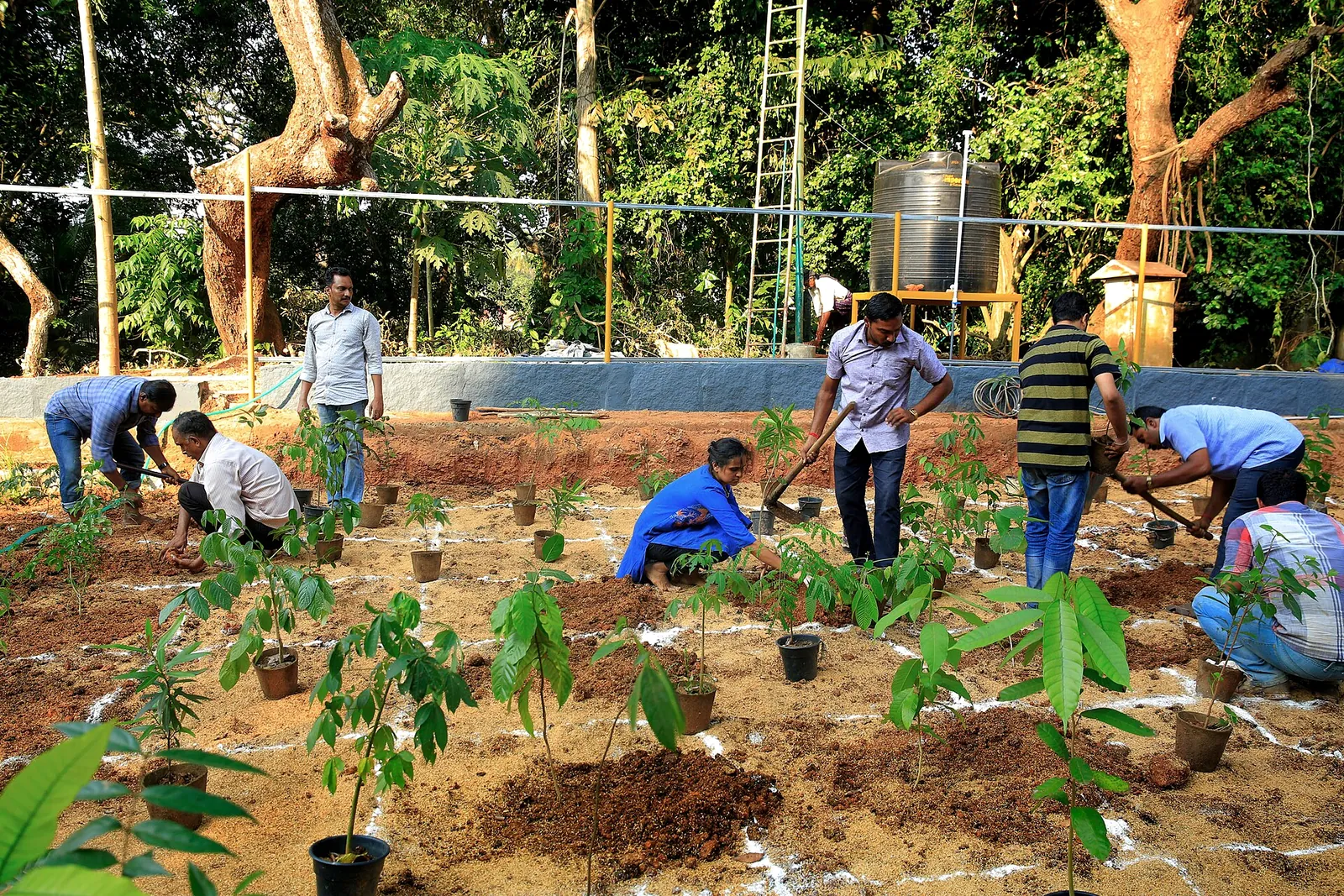
A team of volunteers planting saplings in prepared rows at a community nursery site

Plantation drive, community site.Measured by survival, not by photographs

02 Ways to fund

Four partnership models.

Each model has a defined scope, deliverable and reporting pack. We will shape the detail with your team before any commitment.

01

Fund a plantation drive

A single, visible intervention: site preparation, native saplings, planting and a maintenance schedule. Suited to first-year CSR programmes and employee engagement days.

  • Defined site and sapling count
  • Employee volunteering option
  • Post-drive report with photographs and counts
02

Adopt a green zone

Multi-year support for one community green zone: nursery, planting cycles, local employment and the community management committee that keeps it alive.

  • Named site and community partner
  • Survival-rate tracking over 3 years
  • Quarterly dashboard and annual review
03

Fund a phase

Anchor support for the pilot, expansion or full-scale phase, including nursery infrastructure, logistics, technology and the monitoring system.

  • Hectare target agreed upfront
  • Phase-gated disbursement
  • Independent audit and impact report
04

Technology & in-kind

For technology, logistics and professional services companies: sponsor the mobile tracking platform, provide transport, GIS mapping or pro-bono expertise.

  • Platform sponsorship and co-development
  • Vehicles, cold storage or nursery materials
  • Skills-based employee volunteering
03 Process

From first call to annual report.

Most partnerships are scoped within three weeks. Compliance documentation is shared before the first meeting, not after the MoU.

01

Introduction & scope

A short call to understand your CSR focus, geography, budget range and reporting requirements. We send the compliance pack the same day.

02

Site & programme design

We propose specific sites and a hectare or sapling target, with a costed plan and a monitoring schedule mapped to your reporting cycle.

03

Agreement & onboarding

MoU, CSR-1 documentation, bank details and a named programme manager. Employee engagement and communications plans are agreed here too.

04

Delivery & quarterly reporting

Planting, community engagement, survival monitoring and dashboard updates — reported quarterly with utilisation statements.

05

Annual audit & review

An independent audit and an annual impact report covering ecological outcomes, community benefit and recommendations for the next cycle.

04 Where it fits

Sectors with the clearest overlap.

Real estate & construction

Green buffer zones, rooftop gardens and urban greening around your own sites.

Technology & IT

Sponsorship of mobile applications and the digital tracking system behind every plantation.

Manufacturing & industry

Ecological rehabilitation of industrial wasteland and carbon-offset programmes.

Financial services

Environmental awareness, community resilience and financial-literacy-linked green programmes.

05 Start here

Tell us what your CSR committee needs.

Share your focus area, geography and budget range. We will come back with a costed programme and the compliance documents you need to begin internal approval.

Registered office
207, Ratnanjali Square, Above HDFC Bank, Prernatirth Derasar Road, Jodhpur Char Rasta, Ahmedabad 380015, Gujarat

This form opens your email app with the details filled in. Prefer to write directly? Email info@ecohumanfoundation.cloud.

06 Questions

Before you ask.

Are you eligible to receive CSR funds?

Yes. Eco Human Foundation is registered with the Ministry of Corporate Affairs for undertaking CSR activities, registration number CSR00109943 (letter dated 18 April 2026). The registration is issued by the Office of the Registrar of Companies under the Companies (CSR Policy) Rules.

Do you issue 80G receipts?

The trust holds provisional approval under section 80G of the Income Tax Act, valid for assessment years 2026–27 to 2028–29 (approval reference AABTE0996LF20261), alongside provisional 12A registration. Donation receipts and the approval letter are provided with every contribution.

How is the money tracked?

Programme funds are held in a dedicated bank account and reported quarterly with utilisation statements. Accounts are independently audited, and funding partners receive the audited financial statements and an annual impact report. A public dashboard is planned to let individual donors follow their contribution.

Can our employees take part?

Yes — employee plantation days, school programmes and skills-based volunteering are all part of the model. We handle site logistics, saplings, safety briefing and facilitation, and provide photographs and a participation summary for your internal communications.

Can we visit a site?

Yes. Site visits can be arranged for funding partners at active green zones and nurseries, subject to seasonal planting schedules. We encourage a visit before a multi-year commitment.

Which geographies can you cover?

The programme is designed nationally, with initial focus on Gujarat and western India, urban ecological zones in Delhi, Mumbai, Kolkata, Chennai, Bengaluru and Hyderabad, peri-urban and industrial land in Pune, Ahmedabad and Surat, agricultural heartlands including Noida, Gurugram, Ludhiana and Coimbatore, and rural and tribal districts across Uttar Pradesh, Bihar, Madhya Pradesh, Odisha and Jharkhand.